Added




Getting Sizing Right the First Time
An undersized bypass feeder becomes a maintenance problem. Your team is refilling it constantly—sometimes mid-treatment-cycle—and there’s a real risk that the feeder runs empty between service visits, leaving the system unprotected. An oversized feeder isn’t dangerous, but it’s unnecessary cost.
Getting the size right isn’t complicated. It primarily comes down to one factor: how much water is in your system.
The Primary Factor: Total System Water Volume
Treatment chemicals need to reach a minimum effective concentration throughout the system—typically measured in parts per million (ppm). To reach that concentration, you need enough chemical in the feeder to treat the entire water volume.
Think of it like salting a pot of water. The amount of salt you need depends on how much water is in the pot, not the size of the pot itself. Similarly, feeder capacity should be driven by the volume of water to be treated, not by pipe size or equipment count.
As a general starting point, many closed-loop corrosion inhibitor programs are initially charged at roughly 1 quart per 100–200 gallons of system water—though this varies significantly by product. Always follow your water treatment provider’s specific dose rate.
Sizing Guidelines by System Volume
| Approximate System Volume | Suggested Feeder Capacity | Typical Application |
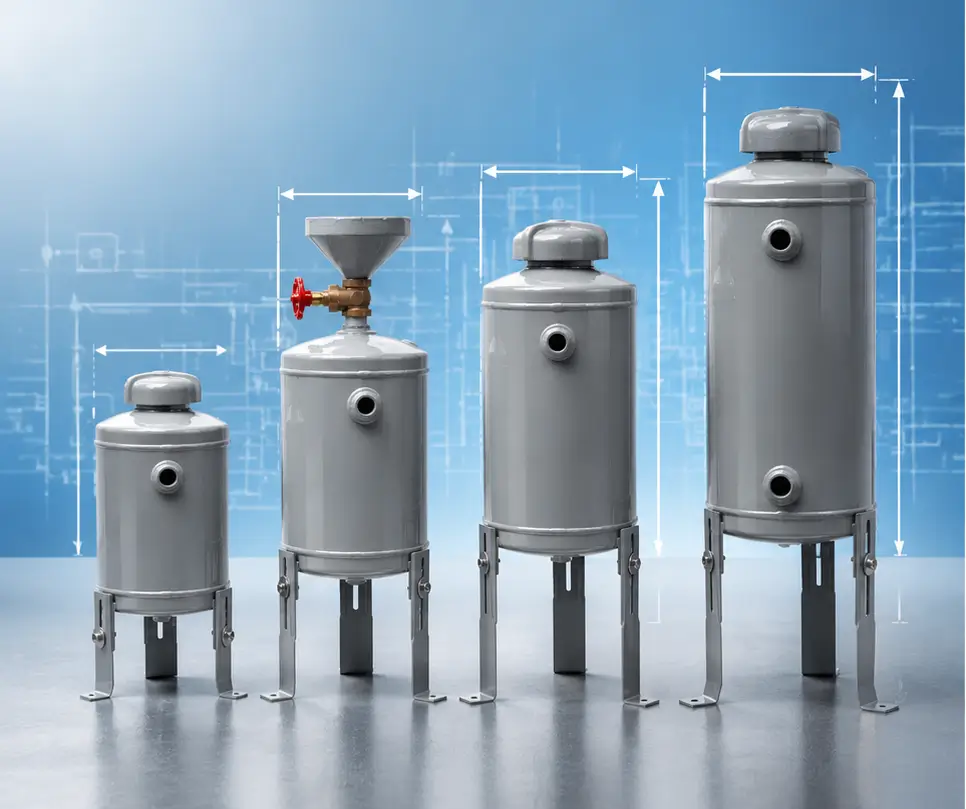
| Under 300 gallons | 1–2 quart (Qt) | Small residential or light commercial hydronic loop |
| 300–1,000 gallons | 2–5 gallon | Small commercial HVAC, multi-zone hydronic |
| 1,000–5,000 gallons | 5–15 gallon | Mid-size commercial HVAC, campus sub-systems |
| 5,000–15,000 gallons | 15–30 gallon | Large commercial chilled water, hospital wings |
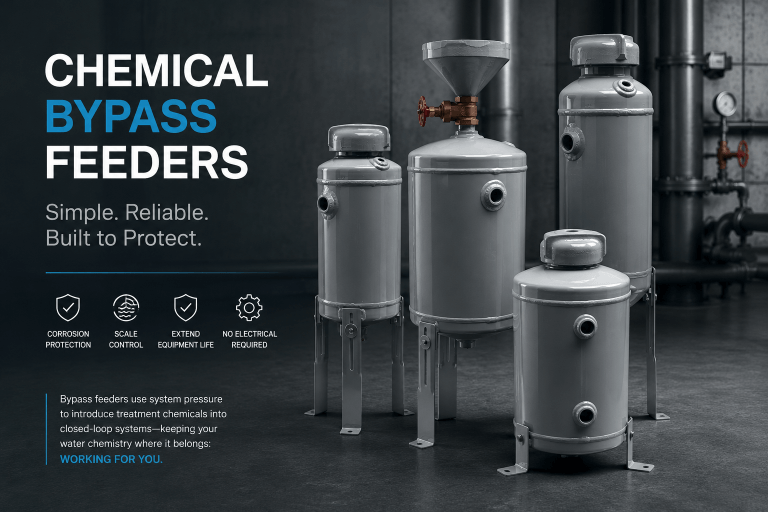
| Over 15,000 gallons | 30+ gallon or multiple feeders | Campus central plants, large industrial loops |
These are starting points. Your water treatment provider should confirm sizing based on the specific chemicals and dosing program being used.
How to Estimate Your System Volume
If system drawings aren’t available, volume can be estimated using:
- Equipment manufacturer data (boilers, chillers, and air handlers often list water content in specifications)
- Pipe volume calculations (pipe diameter and length determine volume; tables are available from ASHRAE and piping manufacturers)
- A fill-and-measure method during system commissioning
For large or complex systems, a water treatment professional can help develop an accurate estimate as part of the treatment program setup.
Secondary Sizing Factors
Treatment Program Requirements
Different chemicals require different dose rates. A system using a multi-component treatment program—corrosion inhibitor plus scale inhibitor plus oxygen scavenger—needs a feeder large enough to hold the combined chemical volume for a reasonable service interval.
Desired Service Interval
How often do you want to refill the feeder? A facility with monthly water treatment service visits can use a smaller feeder. A facility that sees a water treatment technician twice a year needs a larger vessel to avoid running out between visits.
Operating Pressure
The feeder must be pressure-rated above the system’s maximum working pressure. This is a safety requirement, not just a performance consideration. Verify the feeder’s pressure rating before installation.
Vessel Material
Carbon steel is appropriate for most standard treatment programs. Some chemicals—particularly those with low pH, high chloride content, or oxidizing properties—require stainless steel or specialty-coated vessels. Confirm chemical compatibility before ordering.
Future Expansion
If your system will grow—additional zones, more equipment, expanded facilities—factor that into the sizing decision now. Replacing a feeder because the system outgrew it is a preventable cost.
Application-Specific Guidance
Closed-Loop HVAC (Hot Water and Chilled Water)
The most straightforward sizing scenario. Start with system volume, apply your treatment provider’s dose rate, and size the feeder to hold enough chemical for at least two service intervals as a buffer. These systems lose very little water, so treatment chemicals remain in the loop for extended periods.
Boiler Systems
Boiler treatment programs often include multiple products: a corrosion inhibitor, an oxygen scavenger, and sometimes a scale inhibitor. Size the feeder to accommodate the total chemical volume across all products, not just one. Also account for any regular blowdown that removes water—and treatment chemical—from the system.
Chilled Water Systems in Large Facilities
Large campus systems—hospitals, universities, data centers—can have chilled water volumes of 20,000 gallons or more. These applications may require 30-gallon or larger feeders, or multiple feeders positioned at different points in the system to ensure distribution.
Glycol Systems
Glycol systems are sized somewhat differently because the glycol itself acts as both a freeze protectant and a carrier for corrosion inhibitors. The feeder needs to accommodate glycol additions as the system receives makeup water or expands. Ensure the feeder is rated for use with the glycol type in your system.
Signs Your Feeder May Be the Wrong Size
Undersized:
- You’re refilling the feeder more than once per service interval
- Treatment levels are consistently below target despite regular chemical additions
- The feeder is empty when the service technician arrives
Oversized (less common, but worth noting):
- Chemical is sitting in the feeder for more than 12 months without being consumed
- Feeder footprint is creating installation constraints that could be avoided with a smaller unit
Sizing Mistakes to Avoid
- Sizing by pipe diameter instead of system volume. Pipe size tells you flow rate, not total water volume. A 2-inch pipe in a 10,000-gallon system and a 2-inch pipe in a 200-gallon system have the same diameter but completely different treatment requirements.
- Ignoring the treatment program’s dose rate. Some programs require higher initial charges or more frequent maintenance additions. Confirm with your water treatment provider before selecting feeder capacity.
- Forgetting about future system expansion. A facility adding equipment in 18 months is better served by a slightly larger feeder today than a replacement project next year.
- Choosing the lowest upfront cost. A feeder that’s one size larger might add a small amount to the equipment cost while reducing labor costs over years of service.
Frequently Asked Questions
What is the single most important factor in sizing a bypass feeder?
Total system water volume. Everything else is secondary. Start there, apply your treatment provider’s dose rate, and you’ll have a solid foundation for the sizing decision.
Can a feeder be too large?
It’s rarely a serious problem. An oversized feeder holds more chemical than needed, which isn’t harmful—it just means chemical may sit in the vessel longer. In most cases, slightly oversizing is preferable to undersizing.
Does Vector Industries offer feeders in multiple sizes, and can they help with sizing?
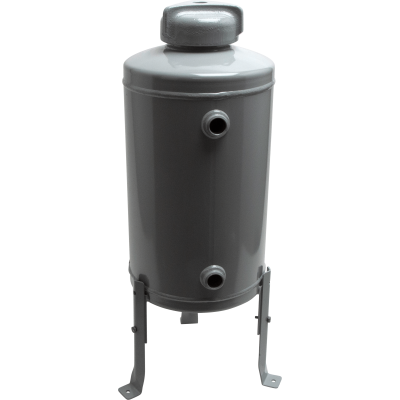
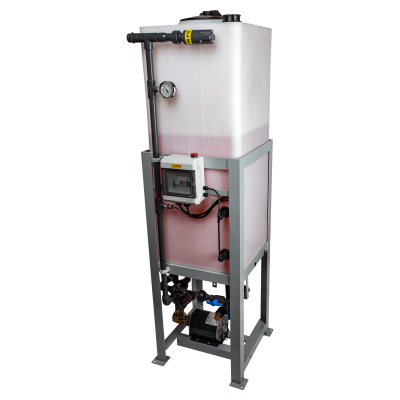
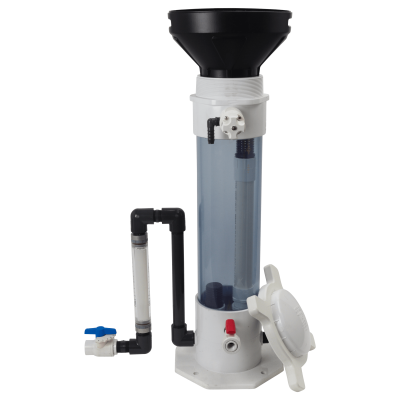
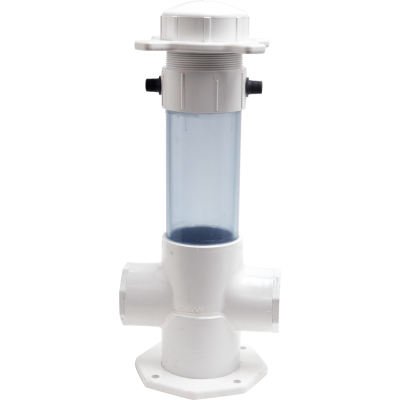
Yes on both. Vector Industries manufactures bypass feeders across a range of capacities—from compact units for small commercial hydronic loops to larger vessels for campus chilled water systems and industrial process applications, all made in the United States. If you provide system volume, operating pressure, and treatment program details, their engineering team can recommend a specific size rather than leaving that to guesswork. For projects where system volume is uncertain, they can also help work through the estimate.
How do I calculate system volume if I don’t have drawings?
Use equipment specifications for major components (chillers, boilers, air handlers) combined with pipe volume tables for the distribution piping. A water treatment professional can assist with this estimate as part of initial system setup.
Should I account for future expansion when sizing?
Yes, if expansion is reasonably foreseeable. The incremental cost difference between feeder sizes is typically modest. The cost of replacing undersized equipment is not.
Working with the Right Manufacturer
Feeder sizing is straightforward when you have good information. Vector Industries manufactures bypass feeders in a range of capacities—from small residential and light commercial units to large-capacity vessels for campus and industrial applications—all made in the United States. Their engineering team can help translate system volume and treatment requirements into a specific feeder recommendation, and they stock standard sizes for quick delivery when projects are moving fast.