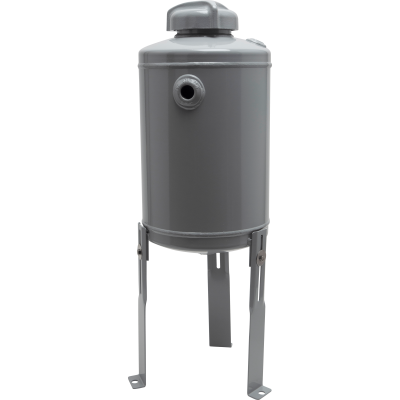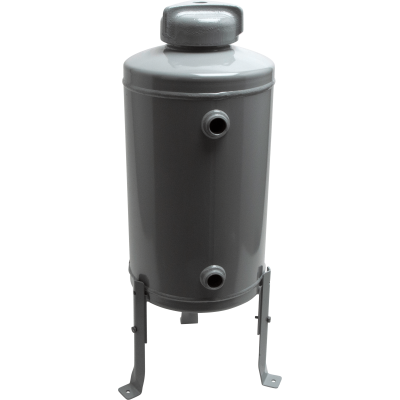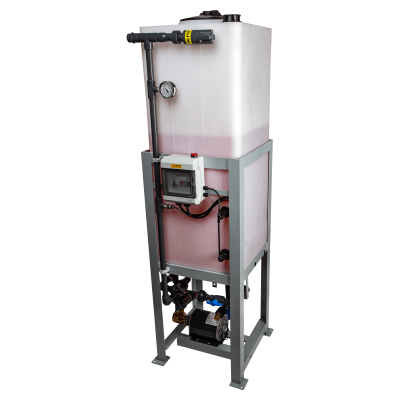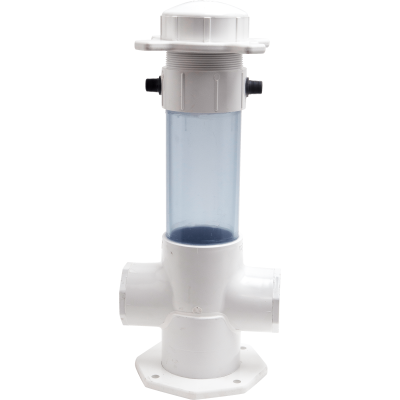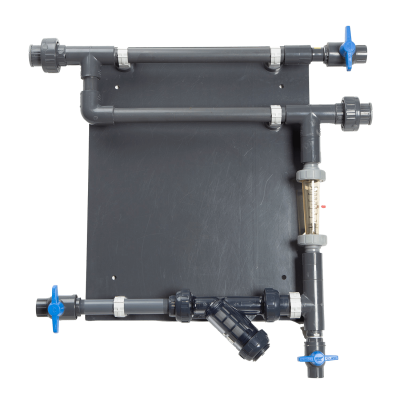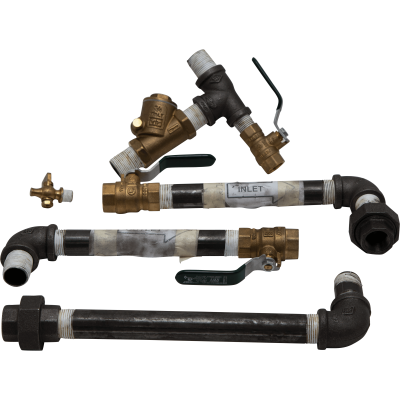


A glycol feeder automatically maintains pressure and fluid volume in a closed-loop glycol system, replenishing the glycol/water mixture as it's lost to minor leaks, air elimination, or system makeup demand. Without one, closed loops running glycol for freeze protection or process cooling are prone to low-pressure faults, air binding, and pump cavitation—problems that are easy to miss until the system underperforms or fails.
Vector Industries' Intelifeeder® Re-Pressurizer System is built specifically for this job. It maintains working pressure from 5 to 80 PSI in glycol-fed closed-loop systems while providing Wi-Fi connectivity through the Inteliverse® app, allowing facility teams to monitor and manage the system locally or remotely—a meaningful upgrade over manual top-off methods that depend on someone physically checking a gauge and catching problems after the fact.
Key Features & Benefits
As with all Vector Industries products, the Intelifeeder is designed and supported in the USA, backed by a company that's manufactured water treatment equipment since 1966. For HVAC, industrial chiller, and process cooling applications running glycol, a properly sized and monitored glycol feeder is one of the simplest ways to prevent avoidable downtime while making ongoing system maintenance easier.
 Added
Added