Added
Added





The Counterintuitive Truth About Bypass Flow
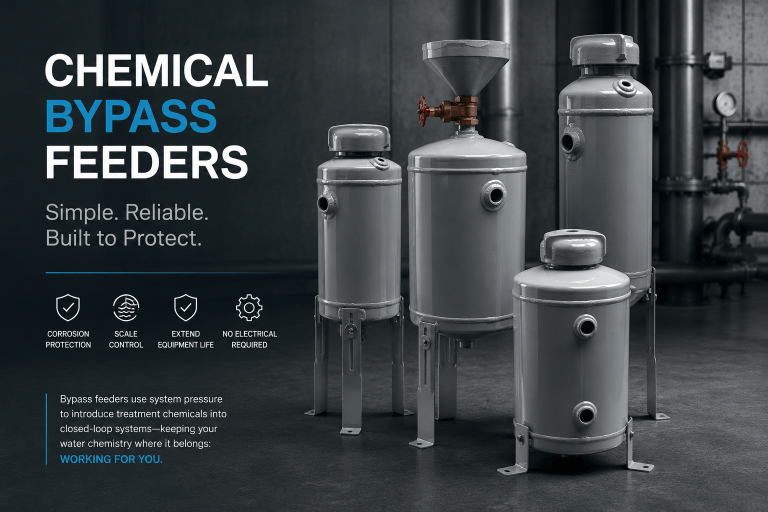
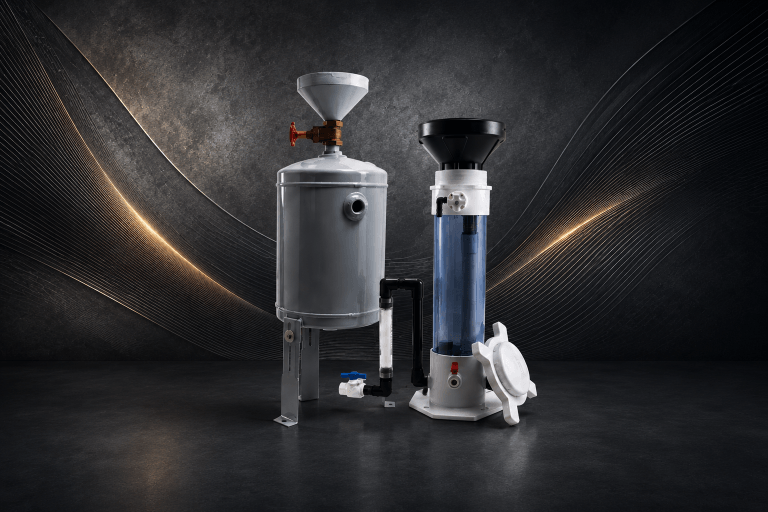
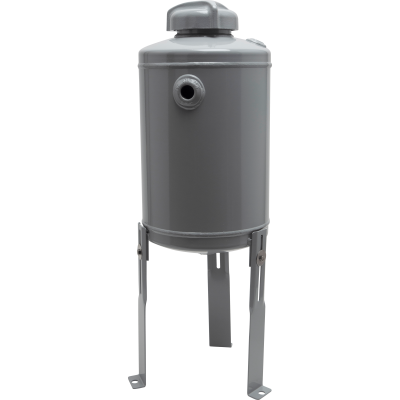
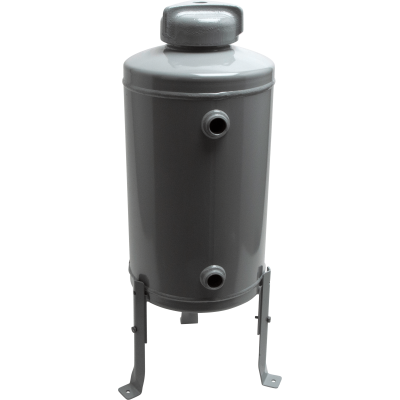
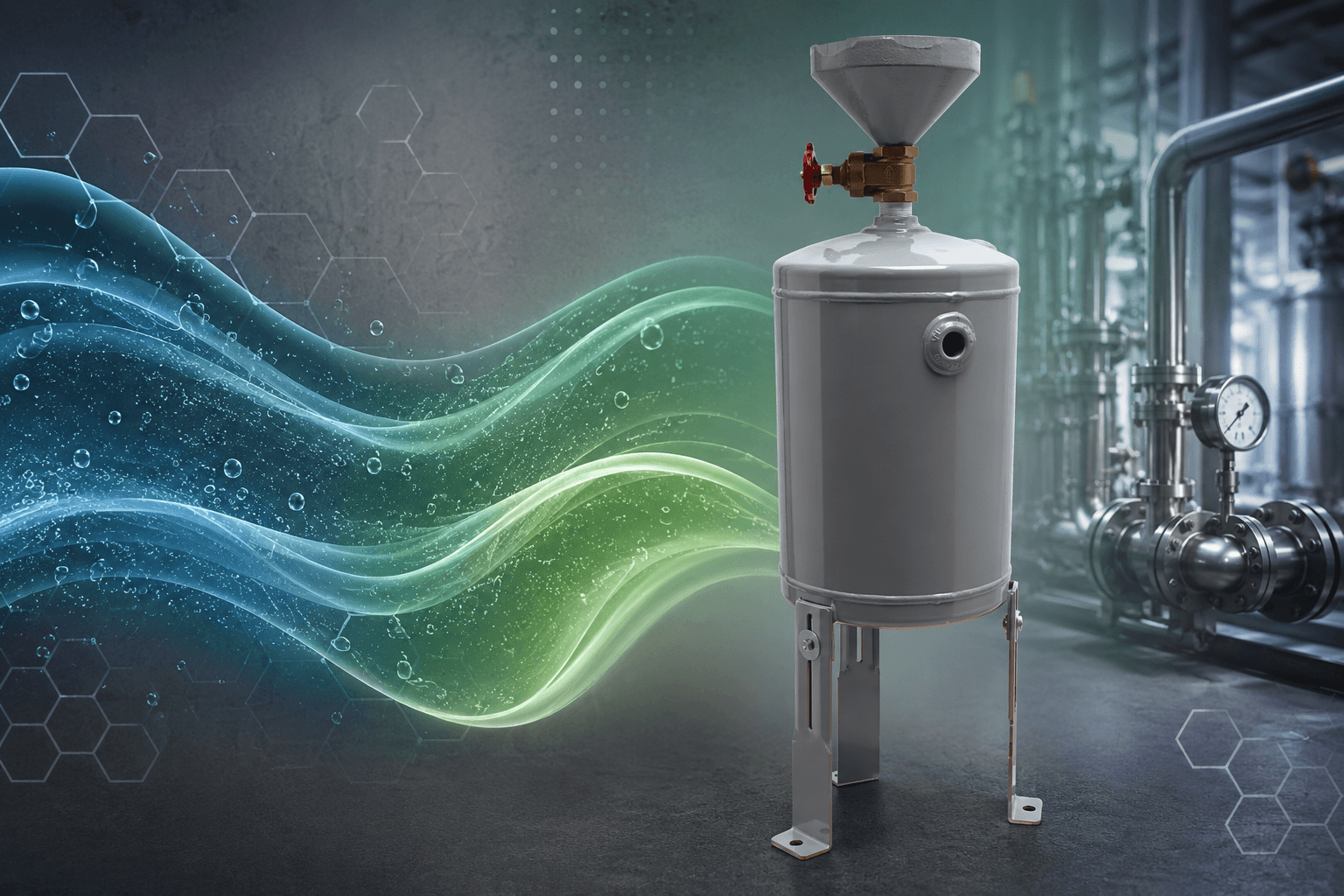
Most people assume a chemical bypass feeder works the way a filter does—full system flow passing through a treatment vessel on its way around the loop. That’s not how it works, and understanding why it doesn’t is the key to understanding why bypass feeders are so effective.
Only a small fraction of your circulating water passes through the feeder at any given time. The rest continues through the main system loop uninterrupted. And yet the treatment chemicals distribute throughout the entire system. Here’s the physics behind that.
The Pressure Differential: What Actually Drives the Flow
A circulating pump creates a pressure difference between the supply and return sides of a water loop. The supply side (pump discharge) is at higher pressure; the return side (pump suction) is at lower pressure.
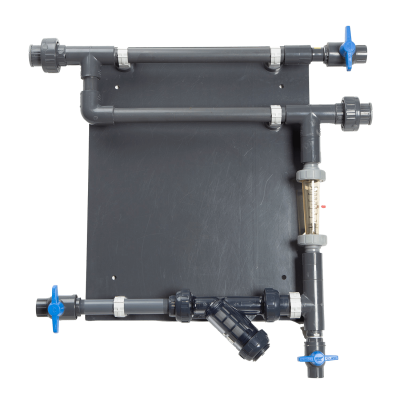
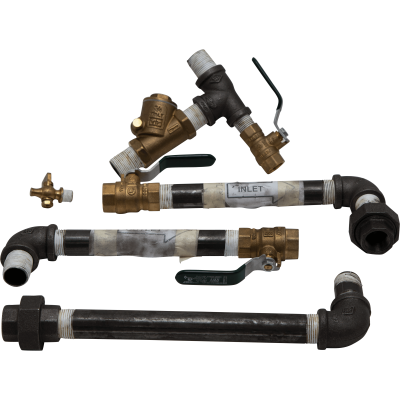
A chemical bypass feeder is installed across this pressure differential—the inlet connected to the higher-pressure side, the outlet to the lower-pressure side. Water always moves from high pressure to low, so it naturally flows through the feeder without any additional pump or motor.
The amount of flow through the feeder depends on the magnitude of the pressure differential and the resistance created by the feeder and its bypass piping. In practice, this is typically 1–5% of total system flow—enough to contact and dissolve the treatment chemical, but not enough to affect main system performance.
Step by Step: What Happens Inside a Bypass Feeder
Step 1 — Water Enters the Feeder
System water diverts from the main loop through the inlet connection and enters the feeder vessel. At this point it’s untreated water—or water at a depleted treatment level—that needs refreshing.
Step 2 — Contact with the Treatment Chemical
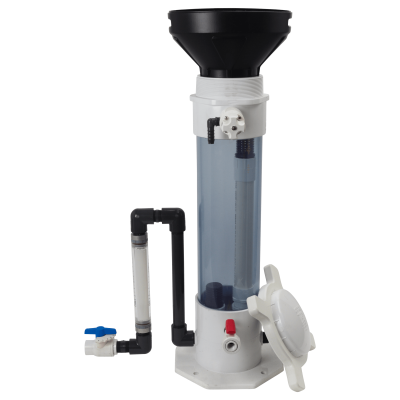
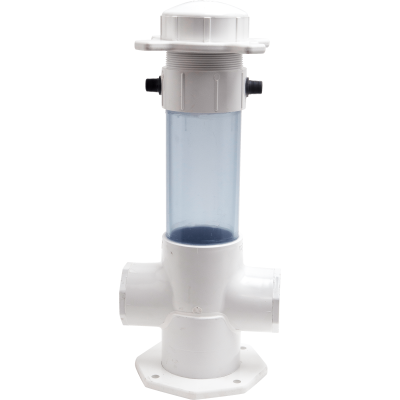
Inside the vessel, the water contacts the treatment chemical. Depending on the product, this may be a liquid, granular solid, or concentrated block. The chemical dissolves or disperses into the water stream. Contact time—the time water spends inside the vessel before exiting—is determined by flow rate and vessel volume.
This is where the gradual nature of bypass dosing matters. Rather than introducing a large slug of concentrated chemical all at once, the bypass feeder releases treatment product slowly and continuously as water flows through. This avoids the localized concentration spikes that can occur with direct addition.
Step 3 — Treated Water Returns to the Main Loop
Treated water exits through the outlet connection and re-enters the main system downstream. At this point it begins mixing with the larger circulating volume.
Step 4 — Distribution Through Circulation
As the system pump continues circulating water, the treatment chemical distributes throughout the entire loop—reaching every component the water contacts: pipes, pumps, heat exchangers, coils, expansion tanks, control valves, and more.
The time required for full distribution depends on system volume, flow rate, and the number of circulations. In most closed-loop HVAC systems, treatment chemicals reach a relatively uniform concentration within a few hours of continuous circulation.
Why Bypass Feeders Work Better in Closed Loops Than Open Systems
In an open cooling tower system, water is continuously lost to evaporation, drift, and blowdown—and continuously replaced with untreated makeup water. Treatment chemicals are diluted and lost at a steady rate, requiring continuous replenishment. A chemical metering pump, which doses continuously and precisely, is usually the better tool for open systems.
In a closed loop, very little water leaves the system. Treatment chemicals introduced through a bypass feeder build to concentration and remain there. Periodic refilling of the feeder as chemicals are consumed is typically sufficient to maintain target treatment levels.
This is why the bypass feeder’s simplicity—no electricity, no controls, no calibration—is an advantage rather than a limitation in closed-loop applications.
Bypass Feeder vs. Direct Chemical Addition: Why the Difference Matters
| Factor | Chemical Bypass Feeder | Direct Addition (Expansion Tank) |
| Introduction method | Gradual, via side-stream flow | All at once; manual pour |
| Concentration control | Moderate — dissolves over time | Minimal — immediate spike then mix |
| Safety | Controlled; vessel contains chemical | Risk of splashing, concentration shock |
| Best use case | Periodic treatment in pressurized closed loops | Initial system charge or very small systems |
| Required shutdown? | Usually no | Depends on fill port location |
Common Misconceptions — Corrected
Misconception: All system water flows through the feeder.
Only a fraction of total flow passes through at any given time. The entire system is treated because that fraction continuously mixes with and distributes through the main loop.
Misconception: The feeder automatically maintains proper treatment levels.
The feeder introduces chemicals. Water testing verifies whether those chemicals are present at effective concentrations. The feeder and the testing program work together—neither replaces the other.
Misconception: If the feeder is installed, you can skip water testing.
Water testing is how you know whether treatment is working. Inhibitors deplete over time, makeup water dilutes concentration, and corrosion activity can consume treatment chemicals faster than expected. Testing catches these issues before they become equipment problems.
Misconception: Bypass feeders are only for HVAC.
They’re used wherever periodic chemical treatment is needed in a pressurized closed loop: boiler systems, process water loops, glycol systems, data center cooling, and more.
Frequently Asked Questions
What creates the flow through a bypass feeder?
The pressure differential created by the circulating pump. Water moves naturally from the high-pressure inlet connection to the low-pressure outlet connection without any additional pump or power source.
How long does it take for chemicals to distribute after adding them?
It depends on system size and flow rate, but in most closed-loop HVAC systems, chemicals reach a relatively uniform concentration within a few hours of continuous circulation.
Does using a bypass feeder instead of a full-flow vessel reduce effectiveness?
No. Because the same water continuously recirculates through the system, the side-stream approach is effective for distributing treatment chemicals throughout the entire loop. Full-flow treatment vessels create unnecessary pressure drop and are not typically used for chemical dosing.
Can I install the feeder anywhere in the system?
No—location matters. The feeder must be installed where there is adequate pressure differential to drive flow through it. Poor installation location is one of the most common reasons bypass feeders underperform. See the installation section of your feeder’s documentation or consult the manufacturer.
How does feeder design affect whether bypass flow actually occurs?
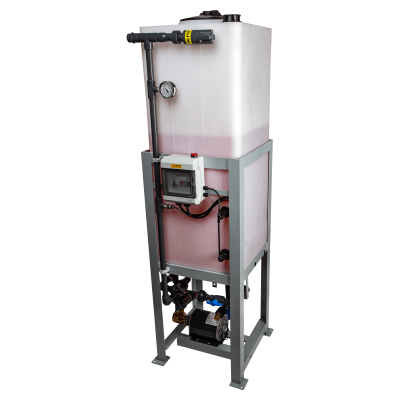
Bypass flow depends on the pressure differential across the feeder and the resistance created by the vessel and bypass piping—which means inlet and outlet placement, internal geometry, and installation guidance all affect real-world performance. Vector Industries engineers their chemical bypass feeders for the pressure ranges typical of commercial and industrial closed-loop systems, and their technical team advises on installation location to ensure adequate differential pressure is present. That application support is something most general equipment distributors don’t provide, and it’s the difference between a feeder that treats and one that just sits on the loop.
Summary
A chemical bypass feeder works by exploiting a pressure differential that already exists in your circulating water system. A small fraction of flow passes through the treatment vessel, picks up dissolved chemical, and returns to the main loop—where continuous circulation distributes the treatment throughout the system. No electricity. No controls. No calibration.
The simplicity is the point.
Vector Industries has built bypass feeders on this principle for more than six decades, engineering units specifically for the pressure ranges, chemical compatibility requirements, and maintenance realities of commercial and industrial water systems.
Check out our full line of chemical bypass feeders here.
If you’d like help selecting the right chemical bypass feeder for your application or have questions about installation and operation, call Vector Industries at (262) 542-4550. Our team can help you choose the right feeder and ensure it performs reliably in your closed-loop water treatment system.