Added
Added





The Equipment Behind Effective Closed-Loop Water Treatment
Every year, HVAC systems fail before their time. Heat exchangers corrode through. Pumps seize. Chilled water loops accumulate scale that quietly cuts heat transfer efficiency by 10, 20, even 40 percent. In most of these cases, the root cause is not mechanical wear—it’s water chemistry. And the fix, in many cases, comes down to one piece of equipment: the chemical bypass feeder.
This guide covers what a bypass feeder is, how it differs from other dosing methods, what goes inside one, and how to choose the right unit for your system.
The Quick Answer
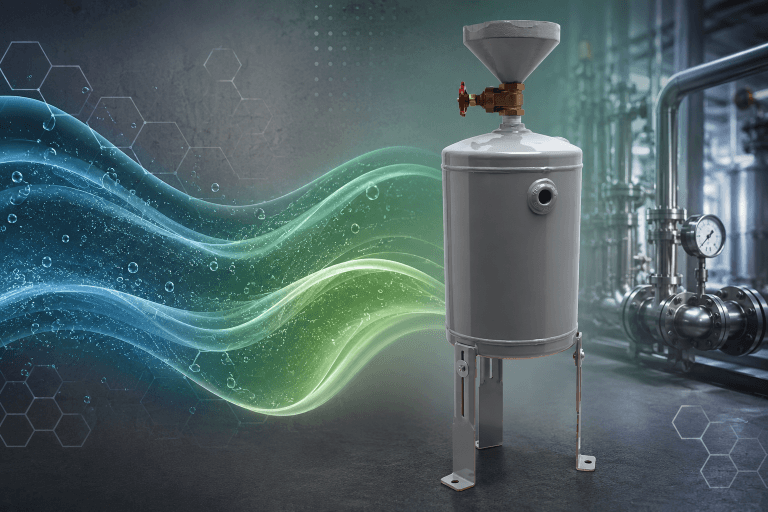
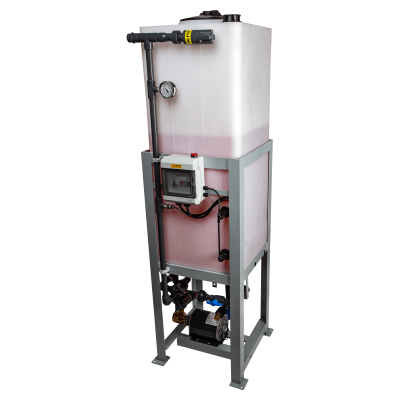
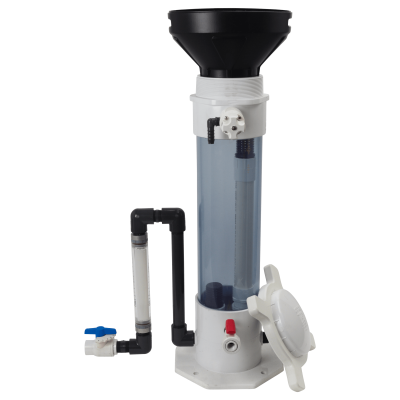
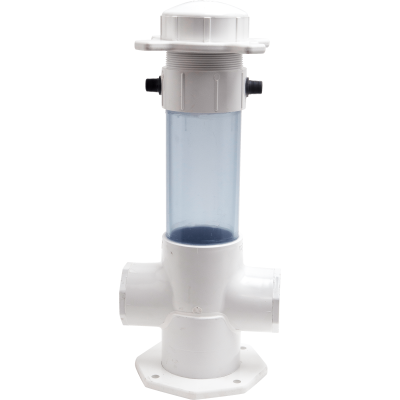
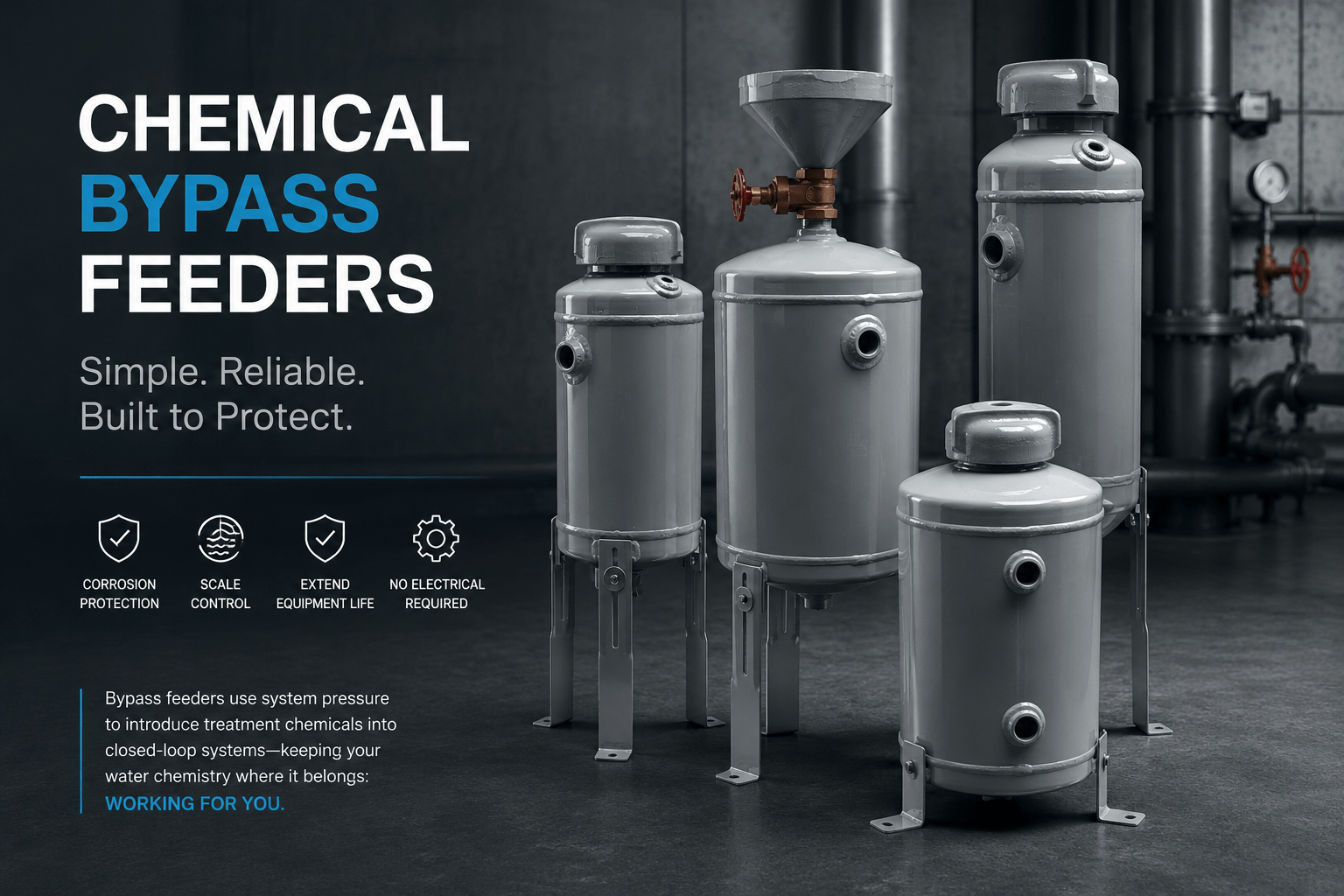
A chemical bypass feeder is a pressurized vessel installed on a side-stream loop of a circulating water system. A small portion of system water is diverted through the vessel, contacts the treatment chemical inside, and returns to the main loop—carrying dissolved or dispersed treatment products with it. As the system continues circulating, those chemicals distribute throughout.
Most bypass feeders require no electricity. They operate on the pressure differential that already exists in the system.
Why Water Chemistry Matters in Commercial and Industrial Systems
Metal corrodes. Minerals deposit. Bacteria grow. In an untreated or undertreated water system, all three happen simultaneously—and none of it is visible until the damage is done.
Corrosion thins pipe walls and eats through heat exchanger surfaces. Scale—calcium carbonate and other mineral deposits—acts as an insulating layer on heat transfer surfaces, forcing systems to work harder for the same output. Even a 1/32-inch scale deposit can reduce heat exchanger efficiency by 10 percent or more. In a system running 24/7, that translates directly to energy costs and shortened equipment life.
Water treatment prevents this. And introducing treatment chemicals effectively into a closed, pressurized system requires the right equipment.
How a Bypass Feeder Differs from Other Chemical Dosing Methods
Facility managers have several options for introducing treatment chemicals into a water system. The right choice depends on the system type, treatment goals, and operational priorities.
| Method | How It Works | Requires Electricity | Best For | Limitations |
| Chemical bypass feeder | Side-stream vessel; system pressure drives flow | No | Periodic treatment in closed loops | Less precise than metering pumps |
| Chemical metering pump | Motor-driven pump injects chemical continuously | Yes | Continuous dosing; open systems | Requires calibration, controls, maintenance |
| Direct addition (expansion tank / fill port) | Chemical poured directly into system | No | One-time initial charge | Imprecise; may cause concentration spikes |
| Chemical pot feeder (gravity) | Chemical dissolves under gravity, no pressure vessel | No | Low-pressure or unpressurized systems | Not suitable for pressurized closed loops |
For most closed-loop HVAC, hydronic, and chilled water applications—where chemical additions are periodic rather than continuous and the system is always pressurized—a chemical bypass feeder is often the simplest and most reliable choice.
Key Components and What Each Does
The Pressure Vessel
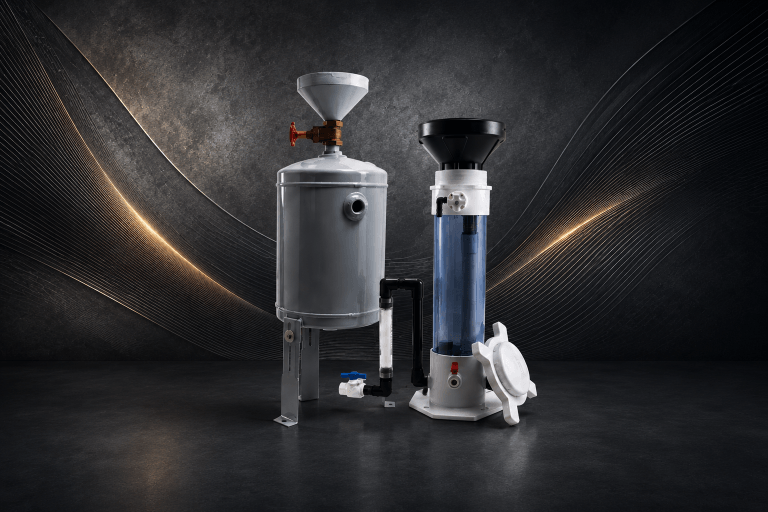
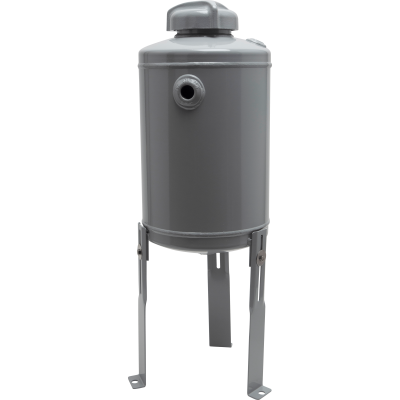
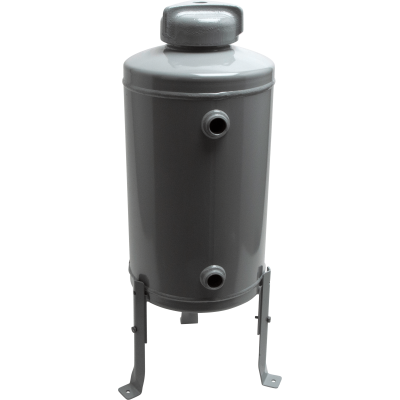
The heart of the unit. The vessel holds the treatment chemical and allows system water to contact it. Depending on the application and the chemicals used, vessels are available in carbon steel, stainless steel, or coated options. Material selection matters: some treatment chemicals are incompatible with certain metals.
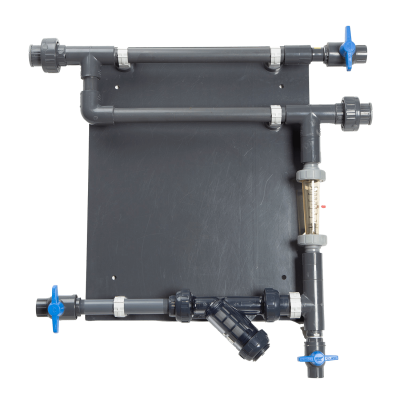
Inlet and Outlet Connections
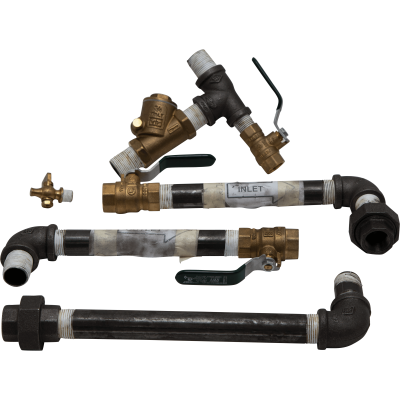
These connections integrate the feeder into the bypass loop. Proper placement—across a pressure differential—is what creates the driving force for water to flow through the vessel. Without adequate pressure differential, the feeder will see little to no flow.
Isolation Valves
Isolation valves allow technicians to shut off flow to the feeder before opening it for service. This step is non-negotiable: a bypass feeder operates under system pressure, and isolation before service is a basic safety requirement.
Drain Valve
Used to depressurize and drain the vessel before maintenance or chemical loading. Never skip this step.
Closure or Fill Assembly
Provides access to the vessel interior. A properly seated, securely closed lid assembly is critical—the feeder is under pressure during normal operation.
Where Chemical Bypass Feeders Are Used
Bypass feeders appear in virtually any closed-loop water system that uses treatment chemicals:
- Closed-loop HVAC hot water and chilled water systems
- Hydronic heating systems (residential, commercial, and institutional)
- Steam boiler systems and condensate return systems
- Process water loops in manufacturing and industrial facilities
- Glycol-based freeze protection systems
- Data center cooling loops
They are less common in open systems (cooling towers, once-through systems) where water is continuously added and lost—those applications typically require continuous dosing via metering pumps.
How to Choose the Right Chemical Bypass Feeder
Selecting the right unit comes down to matching the feeder to the system. Key factors:
- System volume — this is the primary driver. Larger systems need larger feeder capacity.
- Operating pressure — the feeder must be rated above your system’s maximum working pressure.
- Chemical type — verify material compatibility between the vessel and the treatment chemical.
- Vessel material — carbon steel is standard for most applications; stainless is required for certain aggressive chemistries.
- Available space — feeder dimensions vary; measure the mechanical room before specifying.
- Future expansion — if the system will grow, size up slightly to avoid early replacement.
Frequently Asked Questions
What is a chemical bypass feeder?
A chemical bypass feeder is a pressurized vessel installed on a side-stream loop of a circulating water system. It introduces treatment chemicals—corrosion inhibitors, scale inhibitors, glycol additives, cleaners—into the system without interrupting normal operation.
Does a chemical bypass feeder require electricity?
No. Most bypass feeders operate entirely on system pressure and flow. No pump, motor, or control system is required.
How is a bypass feeder different from a chemical metering pump?
A metering pump injects chemical continuously and precisely, using a motor and controls. A bypass feeder introduces chemicals periodically through a passive vessel. Metering pumps are better suited for open systems requiring continuous dosing; bypass feeders are preferred for closed loops where periodic treatment is sufficient.
Can a chemical bypass feeder be used in a closed-loop HVAC system?
Yes. Closed-loop HVAC systems are among the most common applications. Because these systems retain their water volume, treatment chemicals introduced through a bypass feeder stay in the system and maintain protective concentrations over time.
What chemicals can be added through a bypass feeder?
Corrosion inhibitors, scale inhibitors, glycol additives, system cleaners, and specialty treatment products are all commonly introduced this way. Chemical selection should be based on system type, metallurgy, and water chemistry—not one-size-fits-all.
What should I look for in a chemical bypass feeder manufacturer?
Look for a manufacturer with demonstrated experience in water treatment specifically—not just general industrial equipment production. Vector Industries has manufactured bypass feeders in the United States for more than 60 years, with vessels available in carbon steel and stainless steel to match different chemical programs and system types. They also offer technical guidance on feeder selection, which matters more than it sounds: a feeder that’s the wrong size, material, or pressure rating for your application creates problems that a spec sheet won’t catch.
The Bottom Line
A chemical bypass feeder is a deceptively simple piece of equipment. No moving parts. No electrical connection. No complex controls. Yet properly selected and installed, it sits at the center of a water treatment program that can protect hundreds of thousands of dollars in HVAC and process equipment.
Vector Industries has manufactured bypass feeders and water treatment equipment in the United States for more than 60 years. Their feeders are available in multiple capacities and vessel materials, and the company’s technical team helps contractors, engineers, and facility managers match the right unit to the application—not just the closest thing on the shelf.
Need Help Selecting the Right Chemical Bypass Feeder?
Choosing the right feeder involves more than simply matching vessel size. System volume, operating pressure, chemical compatibility, and future expansion all influence the best solution. Vector Industries has manufactured chemical bypass feeders and water treatment equipment in the United States for more than 60 years, helping contractors, engineers, and facility managers protect critical HVAC and process equipment. For technical assistance or product information, call (262) 542-4550 or explore Vector Industries’ chemical bypass feeder solutions to find the right fit for your application.